What to Wear Running by Temperature: The Fahrenheit Chart We Actually Use
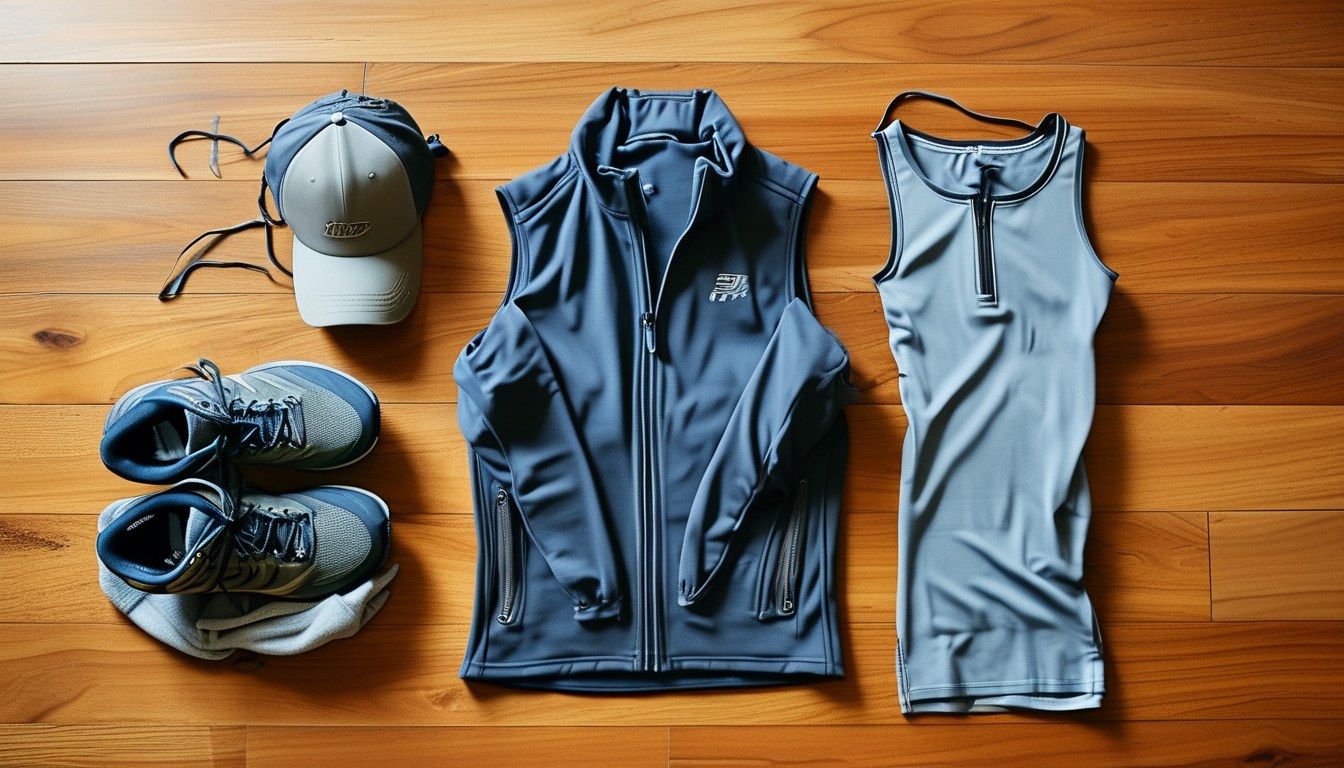
- Dress for the temperature 15 to 20°F warmer than the forecast reads — that is roughly where your body sits ten minutes into a hard effort.
- Humidity changes what fabric can do for you; at 88% it stops evaporating sweat almost entirely.
- Wind matters more than the last five degrees: a 20 mph headwind at 45°F feels like a still 35°F.
Short version — Take the start-line temperature, add 15 to 20 degrees, and dress for that number. At 40°F you are dressing for a 60°F run: tights and a long sleeve, not a jacket. The exception is the pre-race standing around, which is the only part of race morning where you are genuinely cold.
Every runner has one garment they regret. Usually it is a jacket, tied around a waist for eleven miles, soaked through and swinging.
What do you wear at each temperature?
This is our working chart, in Fahrenheit, for a hard effort of 30 minutes or more. Easy runs and walks sit one band colder, because you generate less heat.
| Start temp | Feels like (running) | What we wear | Add if windy |
|---|---|---|---|
| Under 35°F | 50–55°F | Full-length tights, long-sleeve base, singlet or short sleeve over it, light gloves, headband | Wind shell, thin buff |
| 35–45°F | 50–65°F | Tights or capris, long-sleeve top, gloves for the first two miles | Arm warmers you can push down |
| 45–55°F | 60–75°F | Shorts or capris, long-sleeve or short-sleeve, throwaway layer for the corral | Cap with a brim if raining |
| 55–65°F | 70–85°F | Shorts, short-sleeve or singlet | Nothing; take a layer off instead |
| 65–75°F | 80–95°F | Singlet, split or five-inch shorts, cap, sunglasses | Ice or a wet sponge at aid stations |
| Over 75°F | 90°F and up | Least fabric that stays comfortable, pale colors, fluid at every station | Slow the target pace before you start, not at mile 18 |
The middle column is the point of the whole thing. You are not dressing for the weather; you are dressing for a body that is about to run 15 to 20 degrees warm.
How much does humidity change this?
Enough that it should change your pace, not just your clothes. Sweat cools you by evaporating, and evaporation slows as the air fills with water.
This weekend gives a clean example. Erie, Pennsylvania starts Sunday at 68°F with 88% relative humidity; Salt Lake City starts Saturday at 65°F with 48%. Three degrees apart on paper, and completely different races — the dry one will feel like a normal fall morning, the humid one will not let you cool down at all.
👉 Practical version: above 70% humidity, wear less than the chart says and drink more than you planned.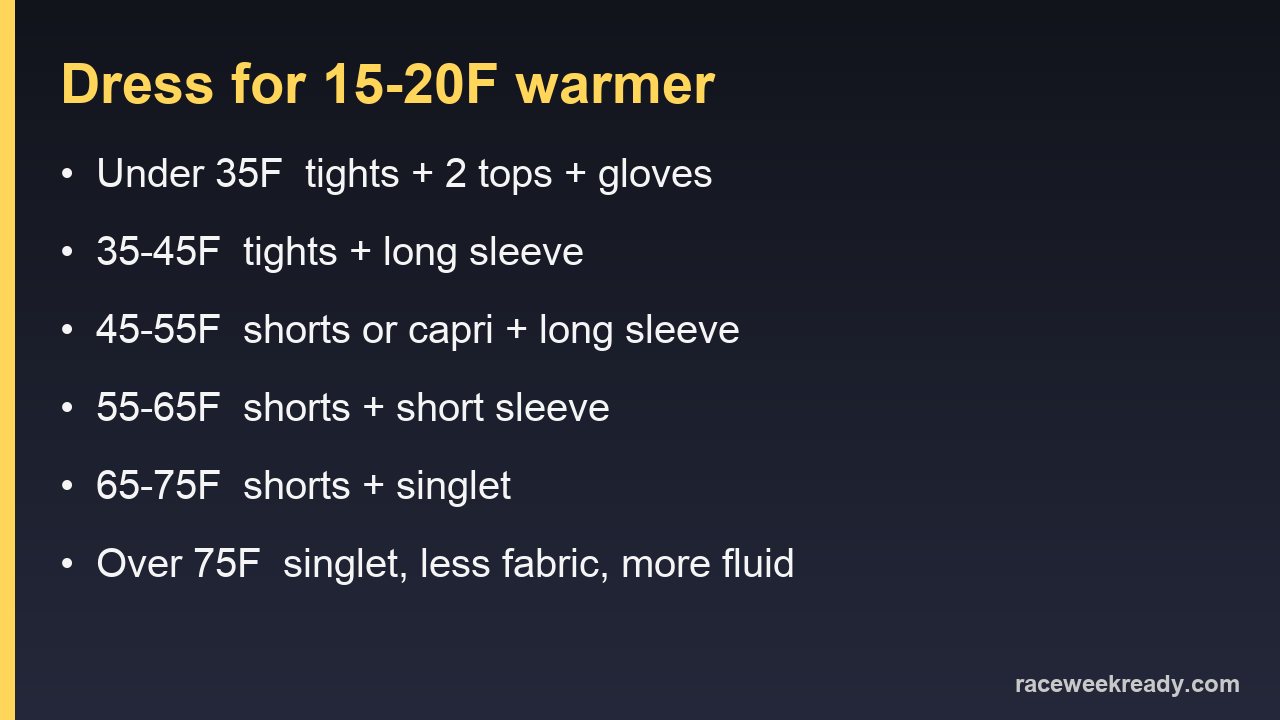
What about wind?
Wind removes the thin layer of warm air sitting against your skin, so it costs you real degrees. The National Weather Service publishes wind chill values for this reason, and their table shows a 20 mph wind pulling 45°F down toward the low thirties in perceived terms.
The running-specific twist is direction. A tailwind on an out-and-back is a loan, not a gift: you will pay it back on the return leg, usually while wet with sweat. Dress for the return half.
What do you do about the 40 minutes before the gun?
This is where most people get it wrong, because they dress for standing still and then run in it.
- Throwaway top layer. An old sweatshirt or a cheap fleece. Most large races collect and donate what is dropped at the start.
- A trash bag with arm holes. Free, blocks wind and rain, weighs nothing.
- Gloves you do not love. They come off at mile two and sometimes do not come back.
- Dry socks in the gear bag. Standing in wet grass for half an hour ruins a race before it starts.
What actually goes wrong out there?
- Cotton anywhere. It holds water and stops working. This includes the free race shirt, which you should never race in.
- A brand-new pair of tights on race day. Seams you have not tested for 13 miles are a gamble; the pair you have already run in is worth more than the one on sale.
- Overdressing for a cold morning that turns. A 41°F start can be 55°F by mile ten, and you cannot remove tights.
- No plan for rain. A brimmed cap keeps water off your face and out of your eyes, which is most of the misery.
- Ignoring chafe points. Anything that rubs at mile three will be bleeding at mile eleven. Lubricant costs less than the shirt does.
Are tights or shorts better at 45°F?
Either works, and the choice is mostly about how you start. If you get cold hands and knees standing in a corral, tights. If you run hot from the first mile, shorts with a long-sleeve on top.
Do I need expensive running tights?
No. The features that matter are a waistband that stays put, a length that ends where you want it, and a fabric that dries. Those exist across a wide range of prices — our sister site tracks the current spread in buy prices by store, and length by height is worth two minutes before ordering.
What if the forecast changes on race morning?
Bring both options to the start and decide during your warm-up jog, not in the hotel room. Ten minutes of easy running tells you more than any chart.
TL;DR — Add 15 to 20 degrees to the forecast and dress for that. Cut a layer above 70% humidity. Treat wind as lost degrees. Keep a throwaway layer for the corral, and never race in cotton. This weekend's specific numbers are in our race listings for Sept. 12–13.
What changes for an easy run or a walk?
Move one band colder, and sometimes two. The 15-to-20 degree rule assumes you are working hard enough to generate real heat; at conversational pace the number is closer to 10, and walking barely moves it at all.
Concretely: a 45°F morning that calls for shorts and a long sleeve at race effort calls for tights and a long sleeve on an easy day, and tights plus a light jacket for a walk. The same 65°F afternoon that means a singlet in a tempo run is a comfortable short-sleeve at recovery pace.
Two exceptions hold at every pace. Hands and ears lose heat fastest, so gloves and a headband stay useful long after the rest of the kit lightens up. And wind still costs you degrees whether you are racing or strolling — the daily city weather page lists the wind alongside the temperature for that reason, and the weekend's numbers are in this weekend's races.
Sources
- Start-line temperature and humidity examples: National Weather Service hourly forecasts for Erie, PA and Salt Lake City, UT, retrieved Sept. 8, 2026.
- Wind chill reference: NWS wind chill chart.
- Pricing and length references: Activewear Deals, Legging Size Guide.