Running Shoe Rotation 2026: How Many Pairs You Need, and What Each Slot Costs
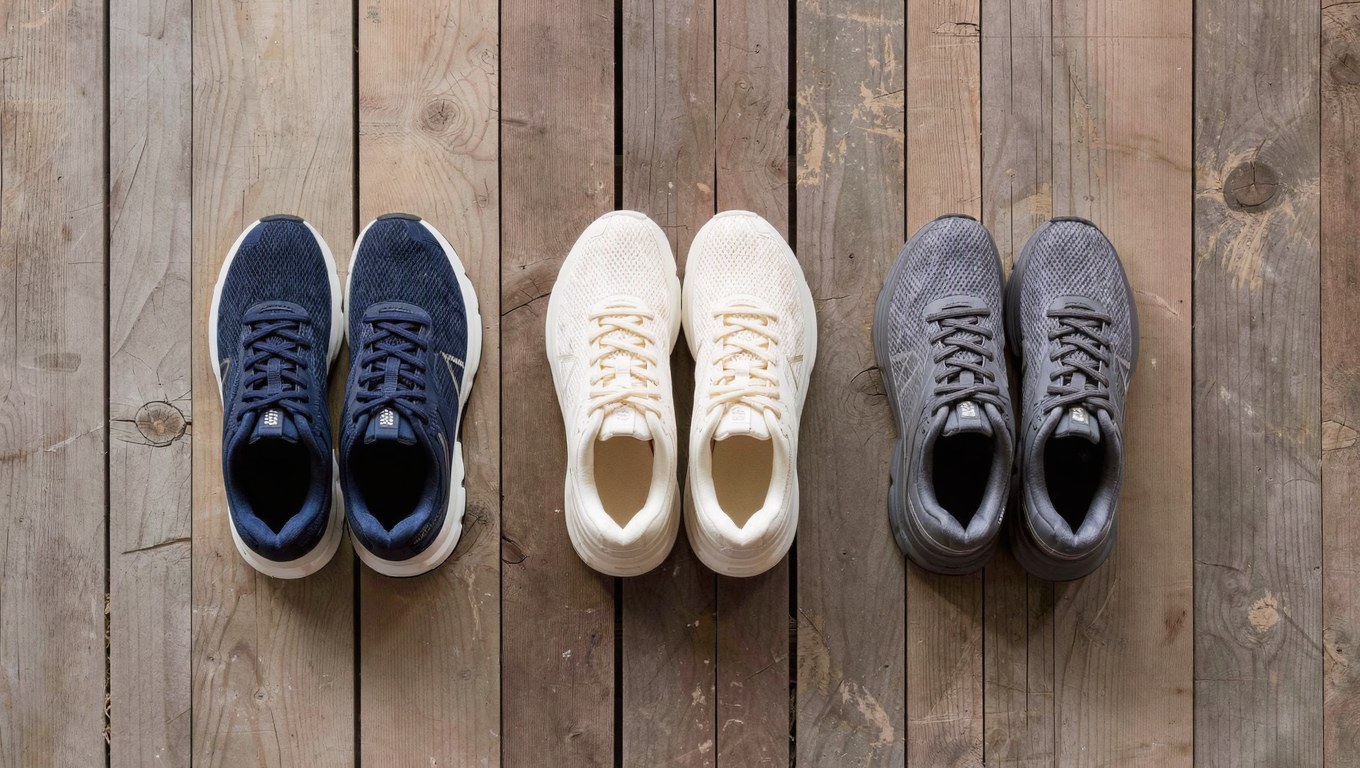
- The two markdowns from our Sept. 16 read still hold: the Triumph 23 at $91.95 (list $170) and the Hurricane 25 at $100.95 (list $170).
- The Endorphin Speed 5 is still listed at $129.95 against a $175 list price, and Saucony's product pages still carry a free express shipping banner.
- If your goal race is inside the next two weeks, you are past the point where a brand-new pair should go on your feet at the start line.
One pair, worn every day, is how most people run. It is also the version of this that the research likes least. In a 22-week study of 264 recreational runners, the ones who spread their mileage across more than one pair finished with an adjusted injury hazard ratio of 0.614 — roughly a 39% lower risk than the single-pair group, with a confidence interval of 0.389 to 0.969 that just clears 1.0.
That is the strongest argument for a rotation, and it is not the one most shoe articles lead with. What follows is the money side: what the three slots cost this week, how fast the expensive foam actually dies, and where the cheap entry point is.
Do you really need more than one pair?
Malisoux and colleagues published that 264-runner study in the Scandinavian Journal of Medicine & Science in Sports in 2015. Runners logged every session on a dedicated platform for 22 weeks. Parallel use of different shoes came out as a protective factor in the adjusted Cox model.
The proposed mechanism is unglamorous. Different midsoles, different drops and different uppers nudge your stride slightly, so the same tissue does not absorb an identical load 50 times a week. Note the width of that confidence interval, though. This is one observational cohort, not a randomised trial, and 0.969 is very close to no effect at all.
Practical read: two pairs is the step that matters. Three is optimisation.
What do the three slots actually do?
Three different jobs, and the difference between them is the whole point.
| Slot | What it is | What it runs |
|---|---|---|
| Daily trainer | Cushioned, durable, slightly boring | 70–80% of weekly miles, recovery days and most of the long run |
| Tempo or super trainer | Lighter, firmer, springier; in 2026 usually a plated or high-rebound "super trainer" | Tuesday's workout, the last miles of a progression long run, an easy hour the same week |
| Race shoe | Carbon or plated racer | Perhaps six outings a year — the pair where price per mile stops making sense, and stops mattering |
What does each slot cost right now?
Every figure here came off the two brands' own US sites on Sept. 16, 2026. Men's and women's prices were identical on both.
| Slot | Shoe | Price |
|---|---|---|
| Daily trainer | Saucony Kinvara 16 | $130 |
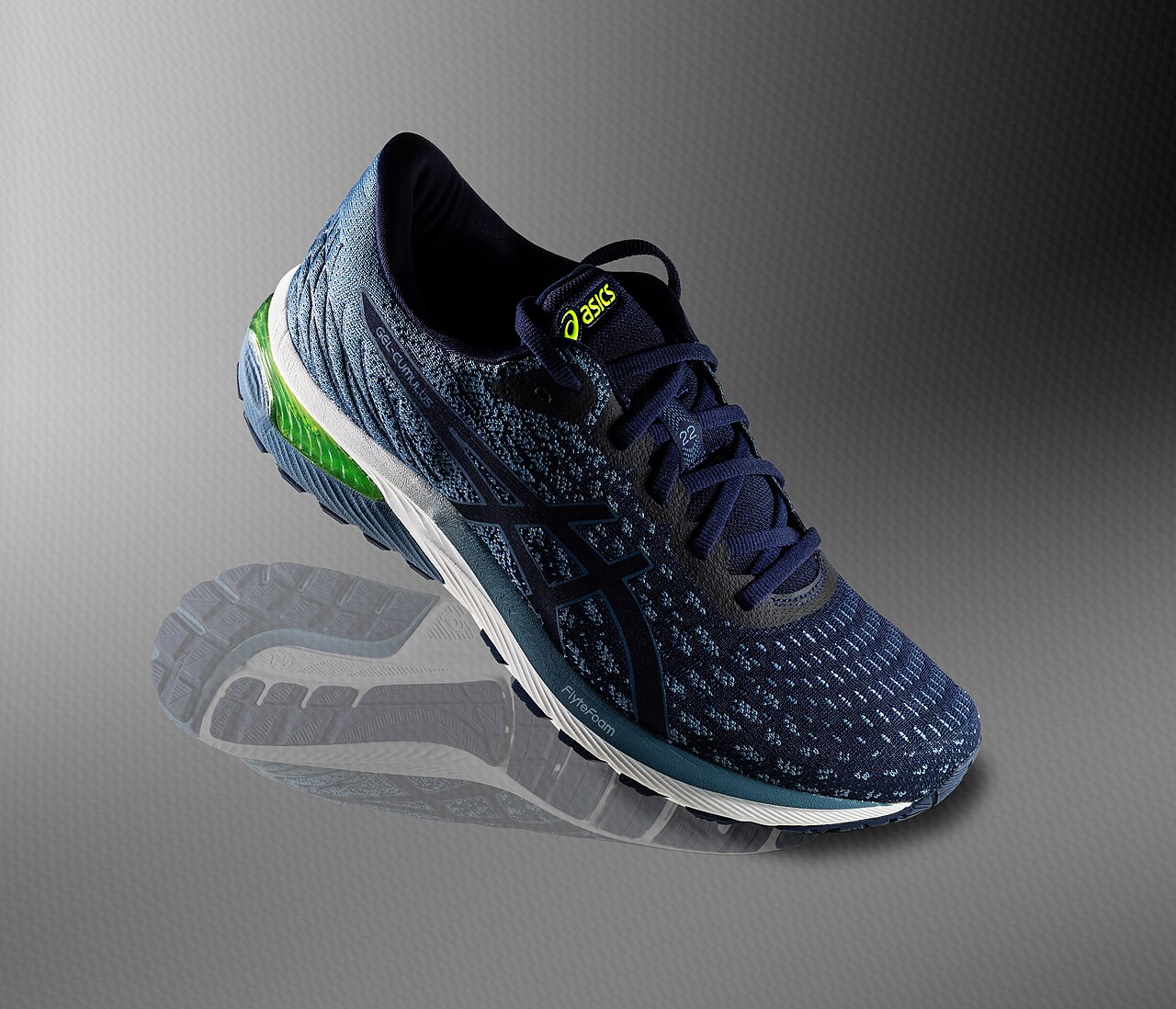
| Daily trainer | ASICS Gel-Cumulus 28 | $145 |
| Daily trainer | Saucony Ride 19 | $145 |
| Daily trainer | ASICS Novablast 6 | $155 |
| Support daily | ASICS GT-2000 15 | $150 |
| Support daily | Saucony Guide 19 | $150 |
| Max cushion | ASICS Gel-Nimbus 28 | $170 |
| Max cushion | Saucony Triumph 24 | $170 |
| Super trainer | Saucony Endorphin Azura | $150 |
| Super trainer | Saucony Endorphin Speed 5 | $175 (listed $129.95) |
| Super trainer | ASICS Superblast 3 | $210 |
| Super trainer | ASICS Megablast | $225 |
| Race day | Saucony Endorphin Pro 5 | $240 |
| Race day | Saucony Endorphin Elite 3 | $290 |
A complete three-slot rotation at list price lands between $455 (Kinvara + Azura + Pro 5) and $690 (Nimbus + Megablast + Elite 3). That is a real number, and for most people it is a bad first move. Scroll to the two-pair section.
How fast does the expensive foam die?
Here is the part that changes how you use a rotation rather than how you buy one. Rodrigo-Carranza and colleagues put 22 trained men through 4-minute treadmill trials at 13 km/h — about 7:25 per mile — in plated shoes that were either fresh or had 450 km (roughly 280 miles) of asphalt on them.
New PEBA shoes ran about 1.8% more economically than new EVA shoes. After 450 km, PEBA had given up 2.28% of its running economy while EVA had lost essentially nothing, and the two foams tested the same. The premium foam is not more durable. It is faster when new and it fades faster.
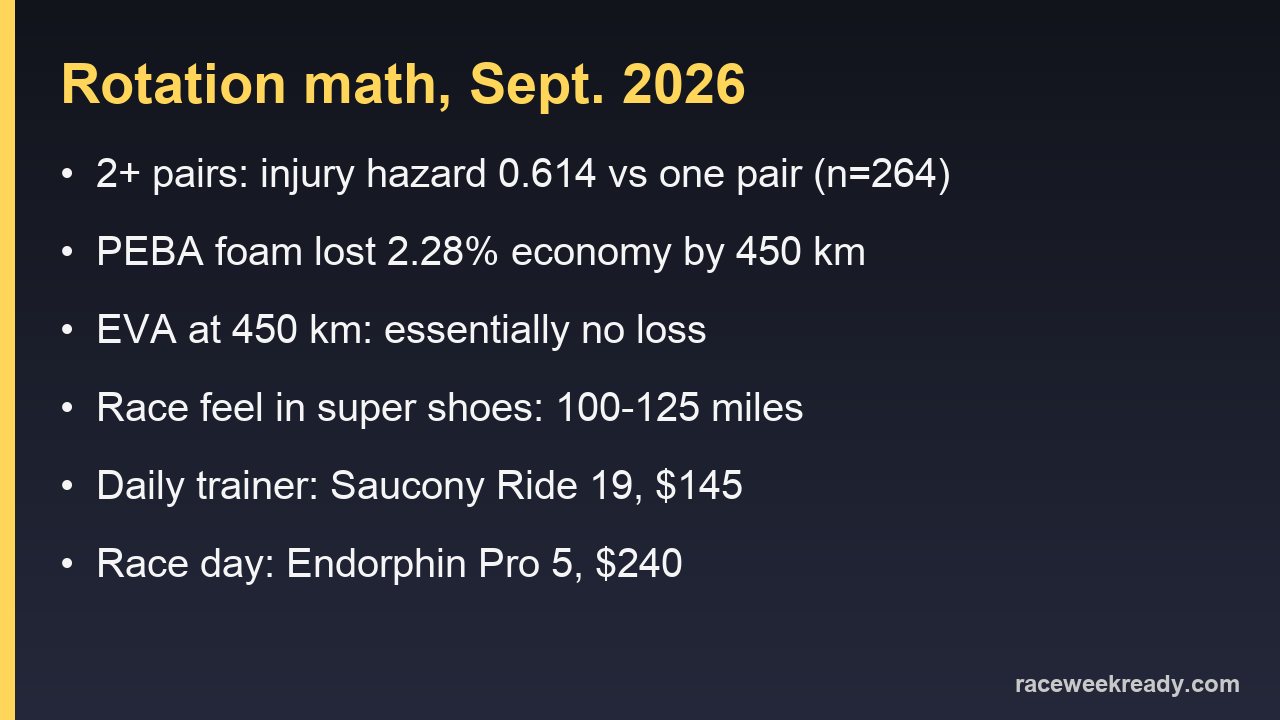
Reviewers and coaches converge on a similar range for carbon racers: the race-day feel holds for something like 100 to 125 miles, with total usable life closer to 190–370 miles as a workout shoe afterwards. The plate itself will outlive all of it. It is the foam that quits.
The classic 300-to-500-mile replacement rule, by the way, traces back to a 1985 midsole-compression study by Cook, Kester and Brunet. It has survived four decades of foam chemistry largely because nobody has produced a better rule of thumb.
What is each pair costing you per mile?
The mileage column below is an assumption, not a measurement — it is the middle of that 300–500 band, pulled down for lighter shoes and hard for the racer. Your weight, your roads and your gait move it.
| Shoe | Price | Assumed life | Per mile |
|---|---|---|---|
| Saucony Kinvara 16 | $130 | 350 mi | $0.37 |
| Saucony Ride 19 | $145 | 400 mi | $0.36 |
| ASICS Gel-Nimbus 28 | $170 | 450 mi | $0.38 |
| ASICS Superblast 3 | $210 | 400 mi | $0.53 |
| Endorphin Speed 5 at $129.95 | $130 | 300 mi | $0.43 |
| Endorphin Pro 5 (race feel only) | $240 | 125 mi | $1.92 |
Read the bottom row twice. A carbon racer costs about five times per mile what a daily trainer does, which is exactly why you do not run Tuesday intervals in it. Save it for the start line, and the same $240 becomes roughly $40 a race across six races.
How do you start without buying three pairs?
Buy the daily trainer first and run everything in it. Add the second pair when you are running four or more days a week, and make it the faster one, because that is the pair that changes what your legs experience. The racer comes last, bought six to eight weeks before a goal race so you can put two workouts through it.
Two pairs at this week's prices: Ride 19 at $145 plus the Endorphin Speed 5 at $129.95 is $275. A discounted Triumph 23 at $91.95 alongside a Kinvara 16 at $130 is $222, and that is a genuinely complete rotation for a first marathon. Last-generation models are where the money is — a shoe does not get slower because a new colourway shipped. Our sister site tracks the markdowns in its fall running gear price check.
Which pair should do your long run this month?
Mid-September puts most autumn marathoners in the heaviest block of the build. If you are counting down to Chicago, New York or Marine Corps, our fall countdown has the week numbers; the short version is that October races are inside the last month of real work.
Put the daily trainer on for the bulk of the long run and the super trainer on for a marathon-pace finish, if your run has one. Do not debut the racer on a 20-miler. And if the long run is starting before sunrise, the shoe is only half of it — see what drivers can and cannot see in our piece on headlamps and reflective vests, and check the morning numbers on the running weather page before you dress. The full temperature chart covers the rest, and the race-day version shows how we apply it to an actual forecast.
What about the rest of the kit?
Shoes get the budget and the attention; the thing that ruins more long runs is a waistband that migrates. For a fall build, full-length tights with a real inner pocket are the workhorse, and the price gap here is wider than in footwear. Bubblelime's high-waist leggings with an inner pocket run $16 in a 25–28 inch inseam, XS to XL — the fabric is a 75% nylon blend and the pocket holds a phone, though the inseam runs long on shorter runners and there is no zip. Compare that against $70–$110 for the equivalent from a running brand and decide what the zip is worth to you. If you are between lengths, inseam by height has the measured numbers.
Everything else that belongs in the bag is in the first race checklist, and the rest of our kit coverage lives under Gear.
Three mistakes worth avoiding
Racing in a shoe with 300 miles on it. The plate is fine. The foam that made it worth $240 is not, and you will not feel the difference until the race is happening.
Buying three shoes that are the same shoe. Three cushioned neutral trainers with a 8mm drop is one rotation in three colours. The variation is the point.
Treating 500 miles as a promise. It is a ceiling drawn from a 1985 study. Heavier runners on concrete reach the end nearer 300.
More kit notes sit in Gear, including the pre-dawn visibility page for long runs that now start in the dark. If you are picking a goal race first, the marathon pages and the next-week race list are the places to start, and the training section has the build-up weeks.
Sources: Malisoux et al., "Can parallel use of different running shoes decrease running-related injury risk?", Scandinavian Journal of Medicine & Science in Sports (2015), n=264, HR 0.614 (95% CI 0.389–0.969) · Rodrigo-Carranza et al., "Influence of different midsole foam in advanced footwear technology use on running economy and biomechanics in trained runners", Scandinavian Journal of Medicine & Science in Sports (2024), 22 runners, 450 km wear · Cook, Kester & Brunet (1985) on midsole compression · prices read from saucony.com and asics.com, Sept. 16, 2026.